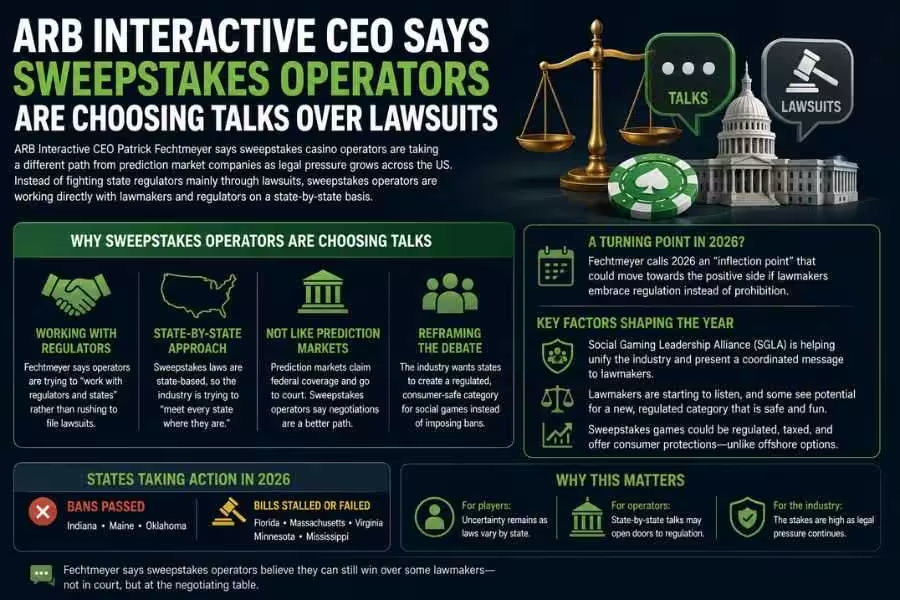

ARB Interactive CEO Patrick Fechtmeyer says sweepstakes casino operators are taking a different path from prediction market companies as legal pressure grows across the US. Instead of fighting state regulators mainly through lawsuits, Fechtmeyer says the sweepstakes industry is trying to work directly with lawmakers and regulators on a state-by-state basis.
His comments come during a difficult but important year for the sector. States including Indiana, Maine, and Oklahoma have passed laws targeting sweepstakes casinos in 2026, while several other states have debated similar bans. Even so, Fechtmeyer described the year as a possible positive turning point if lawmakers become more open to regulation instead of prohibition.
Fechtmeyer Says Sweepstakes Laws Are Different From Prediction Markets
Fechtmeyer’s main point is that sweepstakes casinos and prediction markets sit in different legal worlds.
Prediction market companies often argue they are covered by federal regulation, which is why some have gone to court when states try to block them. Sweepstakes casinos, by contrast, are mostly governed by state sweepstakes laws, meaning each state can have different rules, definitions, and enforcement views.
That is why Fechtmeyer said the sweepstakes industry has chosen a different strategy. He said operators are trying to “work with regulators and states” rather than going straight to lawsuits. He also said the industry is trying to “meet every state where they are,” because each state has its own needs and political concerns.
In plain English, his argument is that sweepstakes operators are trying to negotiate instead of fight. That does not mean the industry agrees with state bans. But it does mean some operators and trade groups appear to believe they have a better chance by explaining the sweepstakes model, pushing for clearer rules, and asking lawmakers to consider regulation.
The Industry Is Trying to Reframe the Debate
The comments also show how sweepstakes companies want to change the conversation. For much of 2025 and 2026, lawmakers have focused on whether dual-currency casino-style games should be banned. Fechtmeyer is instead arguing that states should modernize their laws and create a safer category for these products.
He described 2026 as an inflection point and said he sees it moving “towards the positive side” for the industry. He pointed to the formation of the Social Gaming Leadership Alliance (SGLA) as one sign that sweepstakes operators are becoming more organized in how they speak to lawmakers.
The SGLA has pushed the message that sweepstakes-style games can be regulated, taxed, and given consumer protection rules. Supporters of that approach say bans may push players toward offshore sites with fewer safeguards. Critics say sweepstakes casinos already look too much like online gambling and should not be allowed outside licensed gaming systems.
Fechtmeyer said lawmakers are starting to listen to the industry’s position. He also argued that these games could create a new category in the US that is both safe and fun for users.
Why His Comments Matter Now
Fechtmeyer’s comments matter because ARB Interactive operates Modo, one of the better-known sweepstakes casino brands. The company also acquired Publishers Clearing House last year, giving it a notable position in the wider sweepstakes space.
The timing is also important. Several sweepstakes ban bills have passed this year, but others have stalled. Measures failed or slowed in states including Florida, Massachusetts, Virginia, Minnesota, and Mississippi. Fechtmeyer credited some of that resistance to conversations led by the SGLA and other industry voices.
Still, the legal pressure is not going away. More states are studying bans, regulators are sending cease-and-desist letters, and lawsuits continue to challenge the business model. That means the industry’s negotiation strategy will be tested quickly.
For players, the practical impact is uncertainty. Some sites may leave certain states, while others may keep operating as they push for clearer rules. For operators, Fechtmeyer’s message is simple: the industry believes it can still win over some lawmakers, but it may need to do that state by state.