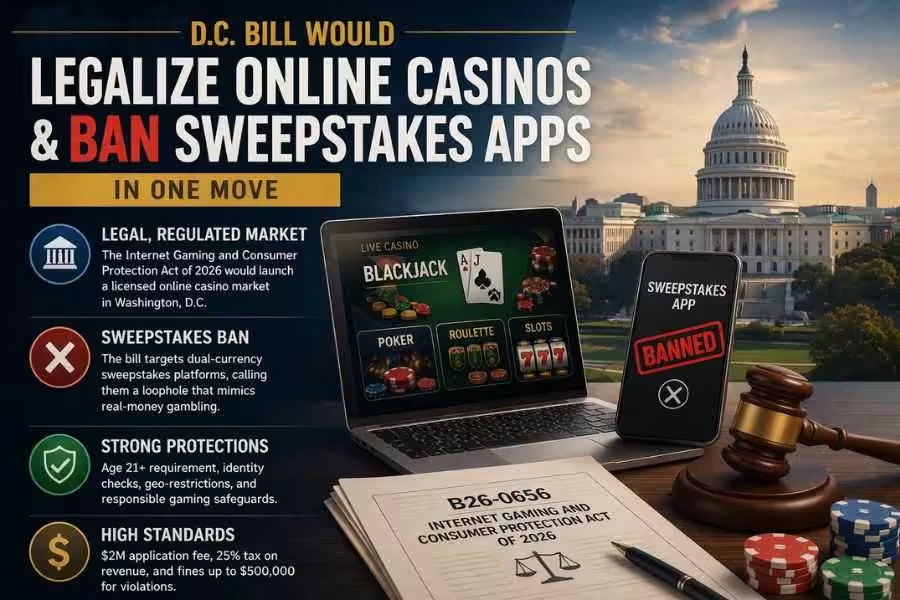

Washington, D.C. lawmakers are looking at a new bill that would do two big things at once: create a legal online casino market and ban many sweepstakes casinos now operating in a gray area. The proposal, B26-0656, is called the Internet Gaming and Consumer Protection Act of 2026. It was introduced on April 9, 2026 by Councilmember Wendell Felder and has been referred to the Committee on Human Services for further review.
The bill is not just about expanding gambling. It is also about changing who gets to offer it. Under the proposal, licensed operators could offer games like slots, blackjack, roulette, baccarat, poker, and live-dealer games through regulated apps and websites. At the same time, the bill would ban sweepstakes-style platforms that use dual-currency systems tied to prizes or cash-like rewards.
What the D.C. Bill Would Do
The biggest part of the bill is the push to create a legal iGaming market in the District. The proposal would put regulation under the Office of Lottery and Gaming, which would handle licensing, compliance, technical standards, and enforcement.
The bill sets a high price for entry. A sweeps operator would need to pay a $2 million application fee for a five-year license. Renewals would cost $500,000 every five years. The proposal also sets a 25% tax on adjusted gross internet gaming revenue.
The bill would also set the minimum age at 21 and require strong consumer protection tools. That includes age and identity checks, geolocation controls, and rules designed to support responsible gaming. In short, supporters say the bill is meant to bring existing online casino play into a licensed market instead of leaving it on offshore or unregulated platforms.
How the Proposal Targets Sweepstakes Casinos
The sweepstakes section is one of the most important parts of the bill. D.C. lawmakers are not only trying to regulate online casinos. They are also trying to shut down what they see as a loophole.
The bill defines a dual-currency gaming product as a game or platform that uses two or more forms of currency, credits, points, or tokens where one or more can be redeemed, transferred, or used for cash, prizes, or prize equivalents. It then defines sweepstakes gaming as a game, promotion, or scheme where a person gives money or something of value, directly or indirectly, for the chance to play a casino-style or lottery-style game and win a prize.
That language appears aimed directly at sweeps casinos. These sites often say one currency is just for fun, while another can be used to enter prize-style games. Critics argue that this makes the experience work too much like gambling. This bill would largely side with that view and block the model unless the activity is otherwise authorized under District law.
The enforcement tools are serious. The bill would allow the Office of Lottery and Gaming to issue cease-and-desist orders against unlicensed internet gaming or unlawful sweepstakes gaming. It could also seek injunctions in court. The measure also allows civil fines of up to $100,000 for each violation, and up to $500,000 when violations are part of the same pattern or practice.
Why This Matters for the Industry
This proposal is important because it shows a strategy more states may consider in the future: legalize regulated online casinos while pushing sweepstakes platforms out of the market.
For operators, the bill creates both opportunity and risk. Large gaming companies may see a new market opening in Washington, D.C. But new sweepstakes brands, affiliates, and service providers could face a much tougher environment if the bill moves forward.
For players, nothing changes yet. The bill is still in the early stages, and lawmakers could amend it before any final vote. But if it passes, D.C. would become another jurisdiction saying that dual-currency sweepstakes products should not operate outside a licensed gaming system.
That is why this bill matters beyond the District. It is not only a local proposal. It is also part of a bigger national trend in 2026, where lawmakers are trying to decide whether sweepstakes casinos should be regulated, restricted, or banned outright.