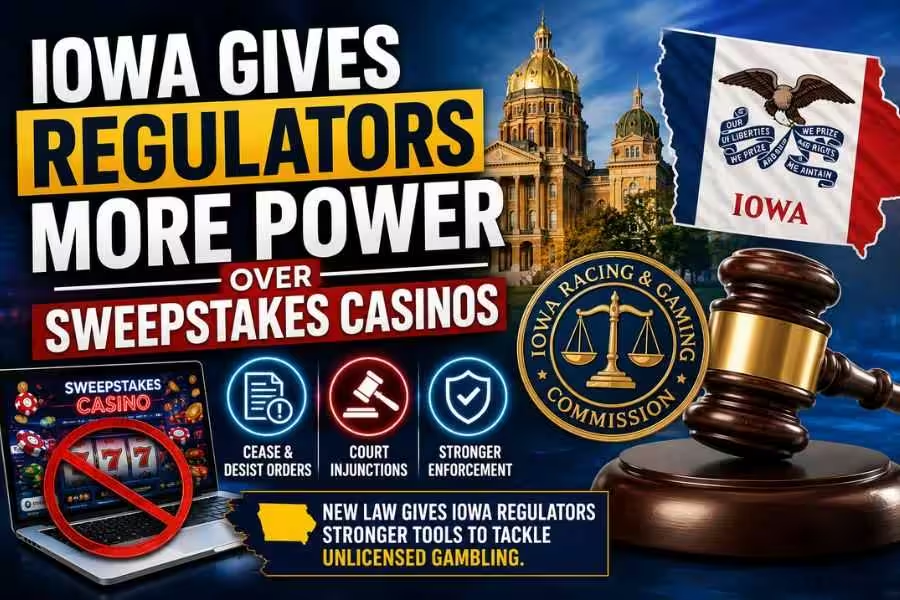

Iowa has officially expanded the power of its gambling regulator to act against sweepstakes casinos and other unlicensed gambling platforms. Gov. Kim Reynolds signed SF 2289 on May 15, 2026, after the bill passed both chambers with unanimous support. The law gives the Iowa Racing and Gaming Commission clearer authority to issue cease-and-desist orders and seek court injunctions against operators it believes are offering illegal gambling in the state.
The measure does not create a direct sweepstakes casino ban like the laws passed in some other states. Instead, it gives Iowa regulators stronger enforcement tools. That means the next question is not whether the bill will pass, but how aggressively the commission will use its new authority.
What SF 2289 Changes in Iowa
The main change is enforcement. Before this law, Iowa regulators had fewer direct tools to act against unlicensed online gambling sites. They could warn the public and monitor illegal activity, but taking action against companies outside the licensed system was harder.
SF 2289 changes that by allowing the commission to take “reasonable or appropriate” action to enforce Iowa gambling laws. That includes sending formal cease-and-desist orders and asking a court for injunctive relief, which is a court order requiring a company to stop certain activity.
The law covers several types of unlicensed gaming activity. That includes games of chance, gambling, sports wagering, internet fantasy sports contests, pari-mutuel wagering, advance deposit wagering, and illegal sweepstakes. For the legality of the sweepstakes casino industry, that last phrase is the key part.
In plain English, Iowa is giving regulators a clearer path to tell unlicensed operators to stop serving people in the state.
Why This Matters for Sweepstakes Casinos
Many sweepstakes casinos use a dual-currency model. Players may use one type of coin for social play and another that can be redeemed for cash, prizes, or cash equivalents under the site’s rules. Operators often argue this is legal promotional gaming, not gambling.
Iowa’s new law does not fully settle that argument. It does not include a long definition of a sweepstakes casino, and it does not automatically ban every site that uses two types of currency. But it does make enforcement easier if the Iowa Racing and Gaming Commission decides a platform is already illegal under existing state law.
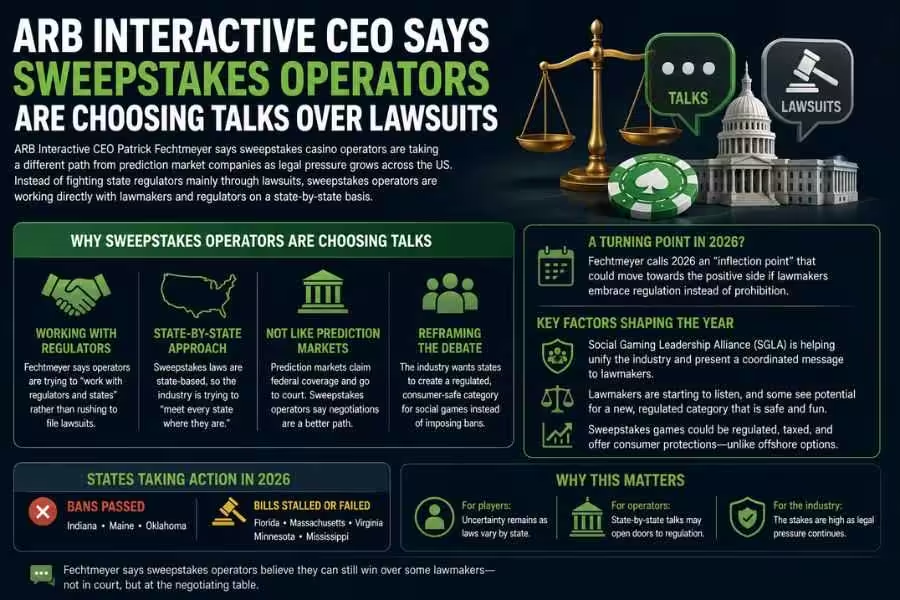
That makes the bill different from direct bans in states like Indiana and Maine. Iowa is taking a more targeted approach. Instead of writing a full prohibition into law, it is giving its regulator more power to act when it sees unlicensed gambling activity.
For operators, that still matters. A cease-and-desist order can create legal pressure quickly. If a company refuses to comply, the state can then seek a court order. That could push some sweepstakes casinos to block Iowa users before any public enforcement action begins.
What Happens Next for Players and Operators
Because the governor has signed the bill, Iowa’s new enforcement system is now becoming active. The official enrolled bill list shows SF 2289 has effective dates of May 15, 2026, and July 1, 2026, depending on the section. That means some parts took effect immediately, while other parts start later.
For Iowa players, there may not be an instant change. Sweepstakes casino accounts are unlikely to disappear overnight just because the bill was signed. But users could start seeing more account notices, updated terms, or location blocks if operators decide Iowa is no longer worth the risk.
For operators and affiliates, the bigger issue is uncertainty. Iowa has not passed a broad sweepstakes ban, but it has given regulators a stronger legal toolbox. That could make the state a more difficult market for unlicensed platforms, especially if the commission decides to make sweepstakes casinos an early enforcement target.
The signing also adds to a larger 2026 trend. More states are moving away from a wait-and-see approach and toward direct action against sweepstakes-style gaming. Iowa’s path is slightly different, but the message is similar: unlicensed online gambling platforms are facing more pressure, and regulators now have more ways to respond.