
Iowa lawmakers have passed a bill that could give state regulators stronger tools to act against sweepstakes casinos and other unlicensed gambling platforms. The measure, SF 2289, passed both chambers unanimously and is now awaiting final enrollment and action from Gov. Kim Reynolds.
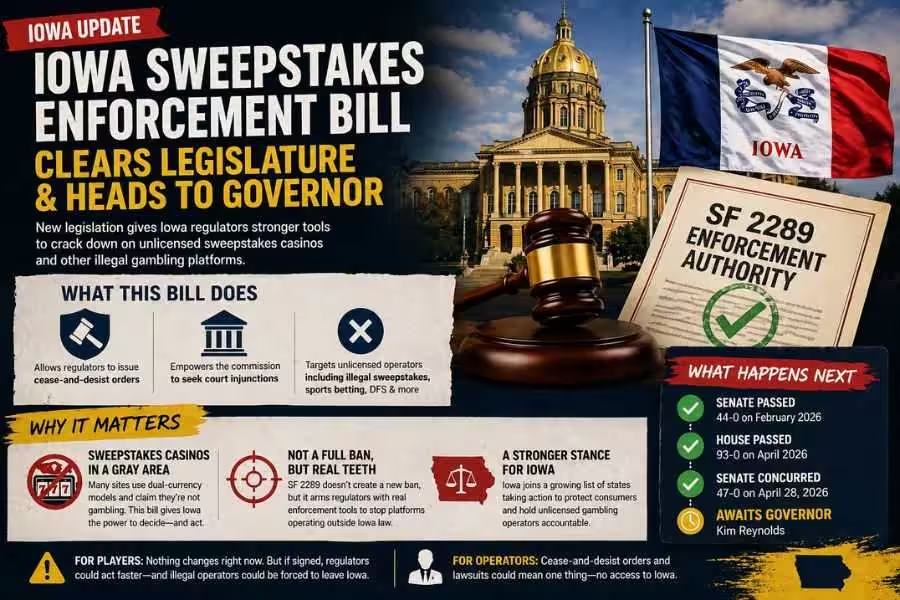
The bill does not create a brand-new sweepstakes casino ban in the same way states like Indiana and Maine have done. Instead, it gives the Iowa Racing and Gaming Commission clearer power to issue cease-and-desist orders and seek court injunctions against unlicensed operators. That could include sites offering games of chance, sports wagering, daily fantasy sports, or illegal sweepstakes without an Iowa license.
What SF 2289 Would Change
The main goal of SF 2289 is enforcement. Right now, Iowa regulators have said their powers are limited when it comes to operators that are not licensed in the state. The commission can warn the public, and it can take action against licensees, but it has less direct power over offshore or unlicensed online platforms.
SF 2289 would change that by allowing the regulator to take “reasonable or appropriate” action to enforce Iowa gambling laws. That includes sending cease-and-desist orders and going to court for injunctive relief, which is a court order telling a company to stop certain activity.
The bill applies to multiple gambling areas. It covers unlicensed pari-mutuel wagering, advance deposit wagering, internet fantasy sports contests, games of chance, gambling, sports wagering, and illegal sweepstakes. For sweepstakes casinos, the key phrase is “illegal sweepstakes,” which gives regulators a clearer hook to challenge platforms they believe are operating outside Iowa law.
Why It Matters for Sweepstakes Casinos
The bill is important because many sweepstakes casinos operate in a legal gray area. These sites often use a dual-currency model, where players use one coin for social play and another coin that may be redeemed for cash or prizes under the site’s rules. Operators often argue that this is promotional gaming rather than gambling.
Iowa’s bill does not fully settle that debate. It does not create a new, detailed definition of a sweepstakes casino, and it does not automatically ban every dual-currency site. Instead, it gives regulators more power if they decide a platform is already illegal under existing Iowa law.
That makes SF 2289 different from direct ban bills in other states. It is more of an enforcement bill than a full prohibition. But for operators, the practical effect could still be serious. A cease-and-desist order can pressure a company to block Iowa users, and an injunction can bring the issue into court if the operator refuses to comply.
What Happens Next
SF 2289 has now completed its path through the Legislature. The Senate first passed it 44-0 in February. The House later passed it 93-0 in April. After House amendments, the Senate concurred and passed the amended version 47-0 on April 28, 2026.
The bill now awaits final steps before going to the governor. If signed, it would become effective upon enactment, meaning the regulator would not have to wait months to use the new authority.
For Iowa players, nothing changes immediately until the bill becomes law and regulators decide how to use it. But the direction is clear. Iowa is not creating a full sweepstakes ban yet, but it is giving its gaming regulator stronger tools to push back against unlicensed platforms.
For sweepstakes operators, the key question is how aggressive the Iowa Racing and Gaming Commission will be. Some sites may wait for a formal notice. Others may choose to block Iowa early to avoid legal risk. Either way, Iowa is now much closer to joining the growing list of states putting direct pressure on sweepstakes casino-style gaming.