
Maine is one signature away from banning sweepstakes casinos. Legislative Document 2007 has cleared both chambers of the Legislature and now sits on the desk of Gov. Janet Mills, marking the state’s most direct move yet to shut down casino-style platforms operating under the sweepstakes model.
Maine Targets the Dual-Currency Model
LD 2007 takes direct aim at online platforms that use dual-currency systems to simulate casino-style gaming. These platforms typically allow players to purchase one type of virtual currency while receiving a second that can be redeemed for cash prizes, a structure lawmakers say closely mirrors real-money gambling while sidestepping licensing requirements.
Under the bill, operating or promoting such platforms would constitute unlawful gambling under state law. The definition is intentionally broad, covering games that simulate slots, poker, table games, bingo, lottery-style formats, and sports wagering. The legislation follows earlier movement in February, when lawmakers advanced the bill out of committee after a key vote.
During legislative discussions, Maine Gambling Control Unit Executive Director Milton Champion indicated that dozens of sweepstakes operators may be serving residents in Maine.
The legislation also goes further than many comparable bills by distinguishing between two forms of virtual currency. It defines “direct consideration” as currency a player can purchase and use to play, and “indirect consideration” as currency received for free, such as through promotions or bonuses, that can still be redeemed for real money. By covering both, the bill closes a gap operators have historically used to argue their platforms fall outside gambling law.
Penalties and Enforcement
The bill introduces a range of enforcement tools designed to deter operators from continuing to serve Maine residents.
Violations would carry civil fines ranging from $10,000 to $100,000 per instance. Sweepstakes activity would also be tied to Maine’s criminal gambling statutes, opening the door to potential criminal liability.
The consequences for licensed entities are significant. Any operator or affiliate connected to Maine’s regulated gambling system could face mandatory license revocation if found to be involved in sweepstakes casino activity. Individuals linked to violations may also be barred from obtaining licenses in the future.
Revenue collected through penalties would be directed to the state’s Gambling Addiction Prevention and Treatment Fund.
Part of a Broader National Shift
Maine’s move is part of a broader national trend, as states increasingly target sweepstakes-style gaming models. Regulators across multiple jurisdictions have raised concerns that these platforms replicate traditional gambling experiences while avoiding licensing, taxation, and consumer protection requirements.
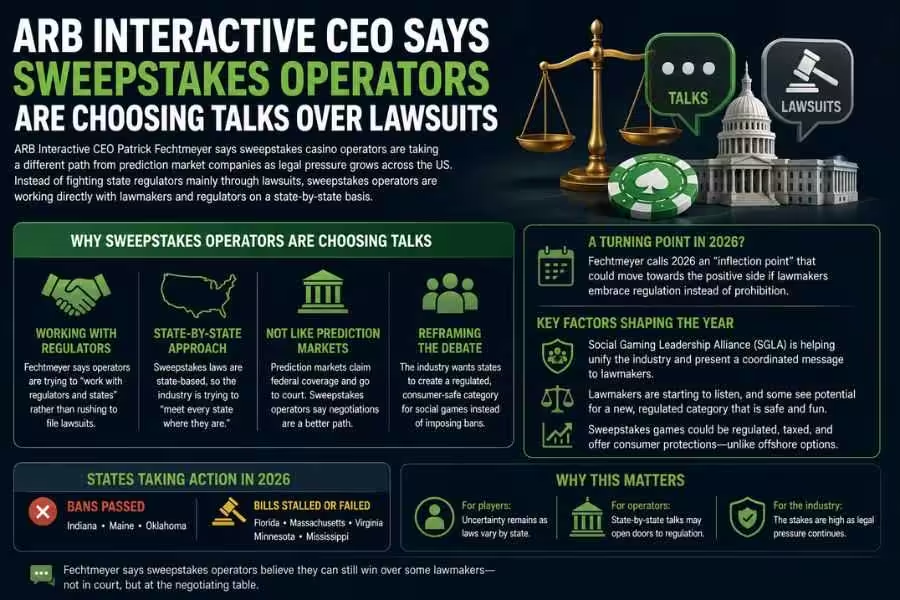
Indiana enacted a similar ban in March 2026, introducing penalties of up to $100,000 per violation. Other states have also considered or advanced legislation addressing dual-currency sweepstakes systems, signaling continued momentum around the issue.
There is also a commercial dimension to the crackdown. Maine legalized iGaming in January 2026, with regulated online casino platforms expected to launch through tribal partnerships in 2027. Licensed operators have argued that unregulated sweepstakes platforms draw players away from the regulated market and undermine the framework the state is building.
What Happens Next
If Gov. Mills signs LD 2007, sweepstakes gaming would become unlawful in Maine on July 14, 2026, 90 days after the legislative session is scheduled to end on April 15.
Given that Mills approved iGaming legislation earlier this year, she is widely expected to sign the bill.
For operators, the practical options are limited. They may exit the Maine market, implement geofencing to block in-state users, or attempt to restructure their products to fall outside the bill’s definition, a difficult task given how broadly LD 2007 is written.
For players, the change would mean the loss of access to sweepstakes-style gaming platforms within Maine, as the state shifts toward a fully regulated online gambling market.