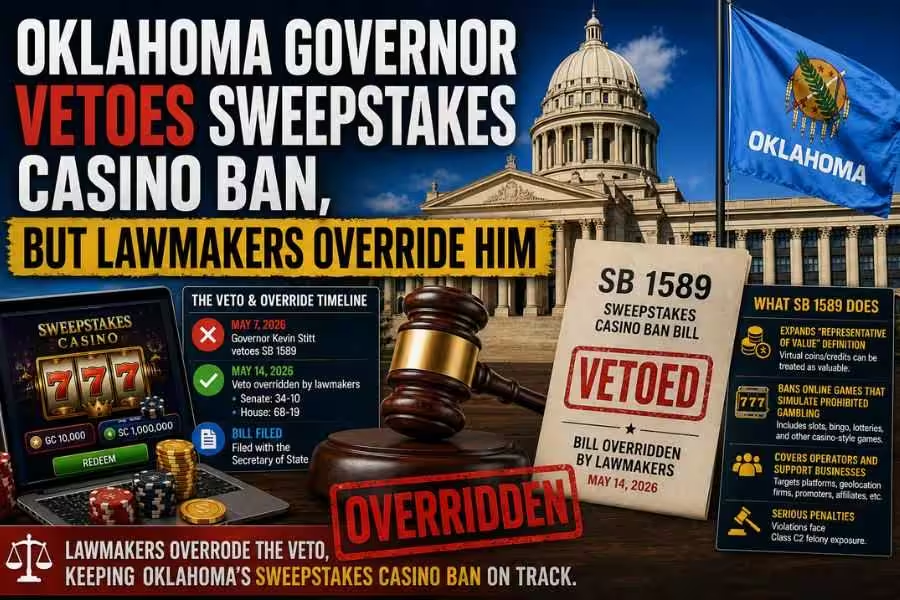

Oklahoma’s sweepstakes casino fight took a major turn when Gov. Kevin Stitt vetoed SB 1589, a bill designed to ban many online sweepstakes casino-style platforms. The veto was recorded on May 7, 2026, after the bill had already passed the Senate 48-0 and the House 65-21.
But the story did not end there. On May 14, lawmakers overrode the veto, with the Senate voting 34-10 and the House voting 68-19. The bill was then filed with the Secretary of State, meaning the governor’s veto did not stop the measure from moving forward.
Why Stitt Vetoed the Bill
Stitt did not give a detailed public explanation for the veto, which left lawmakers, operators, and industry watchers guessing about his reasoning. The bill had moved through the Legislature with strong support, especially in the Senate, where no senator voted against it during the first passage vote.
The proposal was aimed at limiting the legality of online sweepstakes casinos that use a dual-currency system. These sites often offer one type of coin for social play and another currency that can be redeemed for prizes, cash, or cash equivalents. Supporters of SB 1589 argued that this setup looks too much like gambling and should not operate outside Oklahoma’s legal gaming system.
The veto also came during a wider gambling debate in Oklahoma. The state has been discussing sports betting for years, but those efforts have repeatedly run into disagreements between lawmakers, the governor, and tribal gaming interests. SB 1589 was not a sports betting bill, but it touched the same wider issue: who should control gambling-like products in Oklahoma.
What SB 1589 Was Designed To Do
SB 1589 updates Oklahoma gambling law by expanding what can count as a “representative of value.” In simple terms, that means virtual coins or digital credits can be treated as valuable if they can be exchanged for cash, prizes, goods, or other assets.
That definition is important because many sweepstakes casino operators argue they are running promotions, not gambling sites. The bill pushes back against that argument by focusing on whether a player can use digital currency for the chance to win something valuable.
The bill also targets online games that simulate prohibited gambling products. That includes games similar to slots, bingo, lotteries, and other casino-style products. It also reaches beyond operators by covering certain support businesses, such as platform providers, geolocation companies, promoters, and media affiliates.
Violations are treated seriously. Reporting on the bill described the penalties as Class C2 felony exposure, which is far stronger than a warning letter or small fine. That is why the veto mattered so much to the sweepstakes industry: it briefly looked like Oklahoma might step back from one of the tougher state-level bans in 2026.
What Happens After the Veto Override
The latest legislative record shows lawmakers overrode Stitt’s veto on May 14. That means the bill survived the governor’s rejection and continued forward. The measure was then filed with the Secretary of State, completing the legislative process after a long battle to pass it.
For sweepstakes operators, the practical result is that Oklahoma is no longer just a “watch” state. If the law takes effect as written, operators may need to block Oklahoma users, change how their products work, or stop offering prize-style play in the state.
For players, access may not disappear overnight. Operators often update restricted-state lists and terms before enforcement begins. Players may see account notices, more location checks, or redemption changes if platforms decide to exit early.
The larger takeaway is that Oklahoma lawmakers were willing to challenge the governor to keep the ban alive. That makes the state one of the clearest examples of how much pressure sweepstakes casinos are facing in 2026. Even a veto was not enough to stop the push.