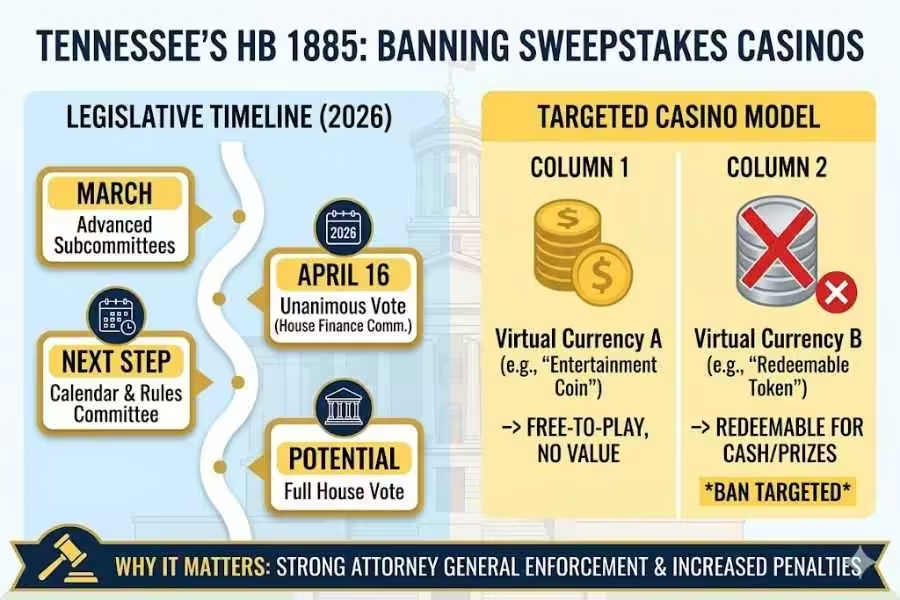

Tennessee lawmakers have taken another step toward banning sweepstakes casinos. On April 16, 2026, the House Finance, Ways and Means Committee advanced HB 1885 with a unanimous vote, moving the bill one stage closer to a full House vote. The proposal now heads to the Calendar and Rules Committee, which will decide whether it goes to the House floor.
The bill is part of Tennessee’s broader push against online sweepstakes-style casinos. State leaders have already sent cease-and-desist letters to operators, and now lawmakers are trying to give that crackdown a stronger legal base. If passed, the bill would treat certain sweepstakes-style gambling as unlawful under Tennessee law and expand the state’s power to investigate and enforce against operators.
For readers unfamiliar with the legal framework around these platforms, you can learn more about whether sweepstakes casinos are legal and how different states approach regulation.
Where the Bill Stands Now
The newest update is the House committee vote. HB 1885 cleared the House Finance, Ways and Means Committee on April 16, and that matters because finance review is often one of the last major hurdles before a bill can be scheduled for a floor vote.
The bill had already been moving through the House earlier in the spring. In March, it advanced out of the House Departments & Agencies Subcommittee and then out of the House State & Local Government Committee. On the Senate side, the companion bill SB 2136 has already moved even further, passing the full Senate earlier this session.
That means Tennessee is now deep into the final stretch of the legislative process. The bill is not law yet, but it has built steady momentum. So far, support for the proposal has been strong, with lawmakers repeatedly voting for it by wide or unanimous margins.
What HB 1885 Would Ban
The bill takes aim at online sweepstakes games and other online gambling that are not already allowed in Tennessee. The language is aimed at platforms that present themselves as legal, free-to-play, social gaming products but use a promotional sweepstakes model tied to casino-style games.
A major focus is the use of virtual currency. The bill targets systems where a player can buy, receive, or earn virtual coins or tokens and then use them in games that offer a chance to win cash, prizes, or cash equivalents. In simple terms, lawmakers are trying to stop the common sweepstakes model where one currency is pitched as entertainment and another can be redeemed under the site’s rules.
The bill also says it would not interfere with forms of gaming that are already legal in the state, such as sports betting, the state lottery, fantasy sports, and certain nonprofit gaming activity. So the proposal is not a broad rewrite of all gambling law. It is specifically built to pressure unlicensed online casino-style platforms.
Why the Bill Matters
The most important part of HB 1885 may be enforcement. The bill would fold these gambling-related violations into the Tennessee Consumer Protection Act, which would give the Attorney General stronger civil tools to investigate and act against operators.
That includes the power to demand records, examine business documents, compel sworn statements, and take legal action to stop the destruction of evidence. The proposal would also increase penalties tied to false or concealed records and remove the old six-month limit that restricted some enforcement actions.
For operators, that would make Tennessee a far tougher market. A clearer law and stronger investigative powers could push some sweepstakes sites to leave the state before the bill even becomes final. For players, the likely result would be more geo-blocking, account notices, and fewer sweepstakes casino options in Tennessee.
The bigger picture is that Tennessee is not acting alone. More states in 2026 are moving to shut down or restrict dual-currency sweepstakes casino models. But Tennessee is now among the states closest to turning that pressure into a finished law. If HB 1885 gets through Calendar and Rules and reaches the House floor, the bill could move very quickly from there.