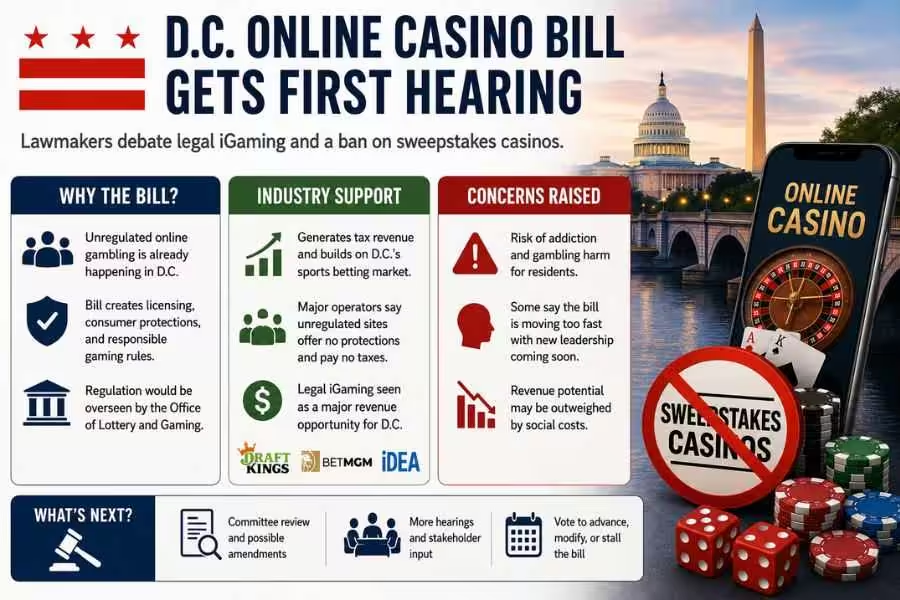

Washington D.C.’s proposal to legalize online casinos and ban sweepstakes casinos had its first public hearing on May 4, 2026. The bill, B26-0656, is called the Internet Gaming and Consumer Protection Act of 2026. It was introduced by Councilmember Wendell Felder and would create a regulated iGaming market in the District while outlawing unlicensed sweepstakes-style casino platforms.
The hearing gave lawmakers a first chance to hear from gaming companies, responsible gambling advocates, and policy groups. As we covered in our earlier article on the D.C. bill, the proposal is not just about gambling expansion. It is also about replacing gray-market online play with licensed products, consumer rules, and state enforcement.
Lawmakers Say Online Gambling Is Already Happening
Supporters of the bill argued that D.C. residents are already using unregulated gambling websites, even though legal online casino apps are not available in the District.
Councilmember Matthew Frumin said the bill would add a new legal framework for “Internet gaming,” including online casino-style games. He told the hearing that games such as “blackjack, poker and roulette” are already available to D.C. residents through unregulated and offshore platforms.
Frumin also said residents wagered close to $700 million on unlicensed platforms in 2024. He argued that these sites operate “without meaningful consumer safeguards or regulatory oversight,” creating health, financial, fraud, and theft risks for residents.
The bill would put regulation under the Office of Lottery and Gaming. It would also require licensing, consumer protection plans, responsible gaming rules, tax reporting, and enforcement tools.
The sweepstakes casino section got less time at the hearing, but it is still important. Frumin said the bill would “define and prohibit unlicensed sweepstakes gaming and similar dual currency gaming products,” giving the District a way to act against unlawful platforms.
DraftKings, BetMGM, and Industry Groups Support Regulation
Major gambling companies backed the bill at the hearing. DraftKings argued that legal iGaming would build on D.C.’s existing sports betting market. Matt Scalf, the company’s senior government affairs manager, said the bill is a “natural next step” because iGaming is already happening through unregulated operators.
Scalf also said these unregulated operators generate $18.8 billion each year nationwide while paying no taxes and following no basic player protection rules in D.C. He described legal iGaming as an “unrealized recurring revenue opportunity” for the District.
BetMGM also supported the proposal. Robert O’Connor, the company’s vice president of government and industry affairs, said digital entertainment is now part of how consumers choose gaming products. He said people want options, including different games, odds, loyalty rewards, and platforms.
Other supporters made similar points. John Pappas, representing the iDevelopment and Economic Association, said “online gambling is here today” and claimed there are 100,000 visits to offshore sites from D.C. every month. He said these sites do not offer age checks, responsible gaming tools, consumer protections, or tax revenue for the District.
Critics Warn About Addiction and Timing
Opponents focused on gambling harm and whether the bill is moving too quickly.
Commissioner Bernie Horn argued that legal sites will not automatically stop illegal ones. He said internet casino gambling is “intended to be addictive” and warned that the government may gain revenue while also having to spend money on people harmed by gambling.
Horn also said the bill may be premature because D.C. is likely to have a new mayor and a different council soon. He argued that a long-term decision like iGaming and the legality of sweeps casinos should wait for the next group of decision-makers.
Responsible gambling advocates raised sharper concerns. Les Bernal of Stop Predatory Gambling said D.C. residents are already losing large amounts through gambling products. He argued that regulated gambling has not solved the harm problem.
Oliver Barie of the National Association Against iGaming said the revenue case is overstated. He pointed to an estimate that D.C. might generate around $18 million per year from iGaming, but said that must be weighed against social costs.
For now, no vote has been taken. The first hearing showed clear support from operators, but also strong warnings from gambling harm advocates. The next key update will be whether the committee changes the bill, advances it, or lets it stall.